Just how much body fat should be lost will depend on one's goals. Let's examine the most effective ways the severely overweight through advanced trainer can lose fat.
Losing body fat is not the easiest of propositions; just ask anyone trying to lose that last ten pounds. It often seems as if the more persistent a person is, the harder this stubborn body fat is to lose. Whether your goal is to get into top shape for a bodybuilding contest or to look good for the beach, fat loss is arguably the biggest incentive to train.
But just how much body fat should be lost to achieve the kind of definition that accentuates the separation between muscle groups, and highlights that all-important abdominal area? It really depends on one's goals.
An extreme level of conditioning is needed for bodybuilding purposes, while a smaller reduction is often all it takes to reveal a nice "beach body." A certain amount of body fat is needed for survival purposes—around 3-4 percent for males and slightly higher for females—with higher percentages (around 10 percent for males and 15 percent for females) deemed within the healthy, acceptable range.
Losing the last 10 or so pounds of body fat is generally a hard thing to do, and the reasons for this are many and varied. Losing even more is, as would be expected, even harder. The best ways to lose fat are often dependant upon the level one is at, so it is best to plan accordingly.
Let us examine the most effective ways the severely overweight through to the advanced trainer can lose unsightly body fat.
THE MOST EFFECTIVE FAT-LOSS METHODS
The following methods can be used together or separately, depending on the goals one has, or the fat-loss stage they are at. Guidelines will be given (see "What to Do and When" section below).
1.EXERCISE MODERATELY WITH AEROBICS & WEIGHTS, GRADUALLY INCREASING THE INTENSITY AS FAT IS LOST
If you're severely overweight, it is probably best to start your fat-burning phase with low-intensity aerobics and weight training, to ensure your body is not placed under undue stress at this early stage. When significantly overweight (over 25 percent body fat in males and 30 percent in females), it is best to work moderately as a way in which to gradually ease into a higher-intensity program.
 |
| Moderate aerobics are likly to burn a greater amount of body fat. |
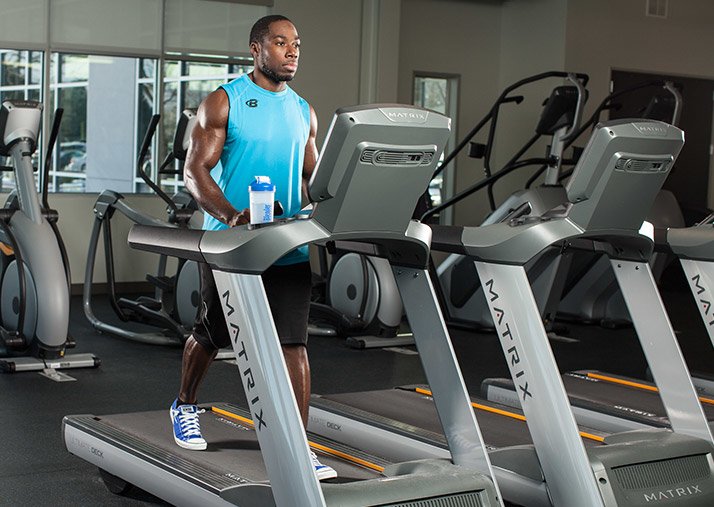
Moderate aerobics are likely to burn a greater amount of body fat if the intensity is kept at around 70 percent of maximum heart rate, and taken beyond the 30-minute mark (with one hour being the eventual goal).
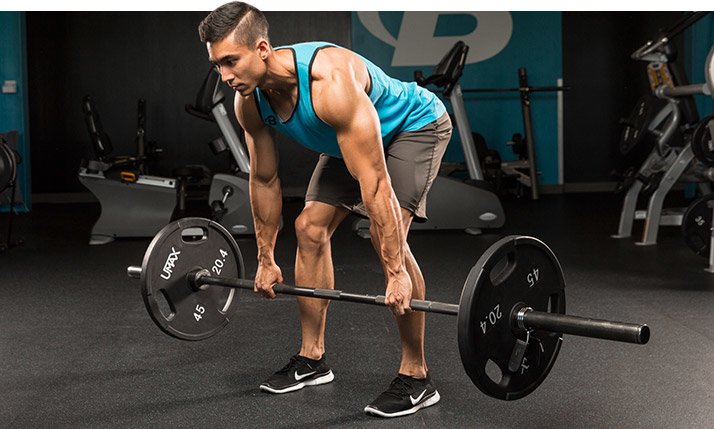
With weight training, high repetitions with moderate weights would work best for an obese client during the initial stages of training. It is important to remember that lower-intensity weight training and aerobics should both be done in the same program to maximize results.
Walking is a perfect, low impact aerobic activity for anyone who is obese. For weight training, all body parts should be targeted with basic exercises that work larger muscles.
2.GRADUALLY CUT BACK ON ALL BAD FATS, WHILE STRATEGICALLY CUTTING BACK ON CARBOHYDRATES
It has been shown that fat intake of the wrong kind will result in increased fat gains. This stands to reason, as the body will typically burn carbohydrates for fuel and use protein for repair. Therefore, it makes sense to cut back on bad fat while increasing the good type.
Good fats such as the omega-3 and omega-6 fatty acids will actually have a fat-burning effect, as they enhance metabolic function (the metabolic rate is an indicator of how the body uses stored energy). Their use—as opposed to the saturated bad type found in meats and hard at room temperature—should be encouraged.
Strategically cutting back on carbohydrates means eating specific carbs at certain times to achieve a fat-burning effect. Complex carbohydrates will generally maximize the fat-burning effect because they stimulate the metabolism without causing the outpouring of insulin, which causes greater fat storage.
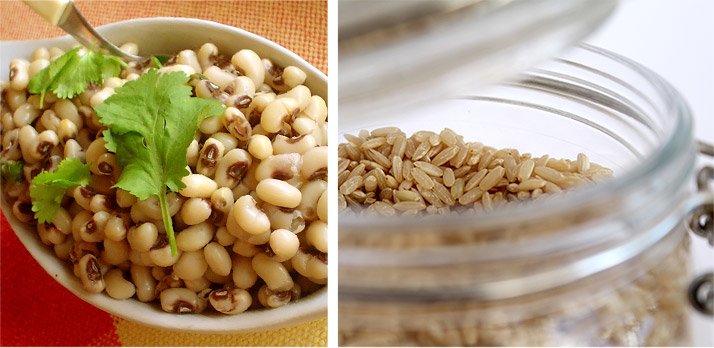
Complex carbs include brown rice, beans, oats, and potatoes, and their use is to be encouraged. However, the short-burst simple-sugar carbohydrates are to be avoided during a fat loss phase, as they can cause a large insulin spike and resultant fat gains. They are also concentrated, and generally higher in calories.
A third type of carbohydrate, fiber, which can be found in high-wheat foods and certain fruits and vegetables, is an important one for fat loss because it increases feelings of fullness and pushes fat through the system to be eliminated.
Best times to eat complex carbohydrates for fat loss are at all meals before 6:00 p.m. Simple carbohydrates can be eaten directly after training, as the body will more readily store them as glycogen, not fat, at this stage. For general health, the recommended intake for fiber is 30 grams per day. For fat loss, an additional 10 grams is advised.
3.MIX UP AEROBIC SESSIONS
For variety—to eliminate boredom and encourage adherence—it is worthwhile to do a range of aerobic activities. These various activities will also have differing fat-burning effects. Combined, they may stimulate the metabolism to greater heights, therefore enhancing fat loss on a larger scale.
4.EXERCISE AEROBICALLY AFTER WEIGHT TRAINING OR FIRST THING IN THE MORNING
One school of thought has it that training aerobically directly after weight training, or first thing in the morning, will stimulate greater gains in fat loss. The idea is that glycogen stores will be depleted at this time and therefore fat will be used directly for fuel. In many cases, this strategy has worked. However, some feel it is not a valid method. It is worth trying though.
5.HIIT TRAINING
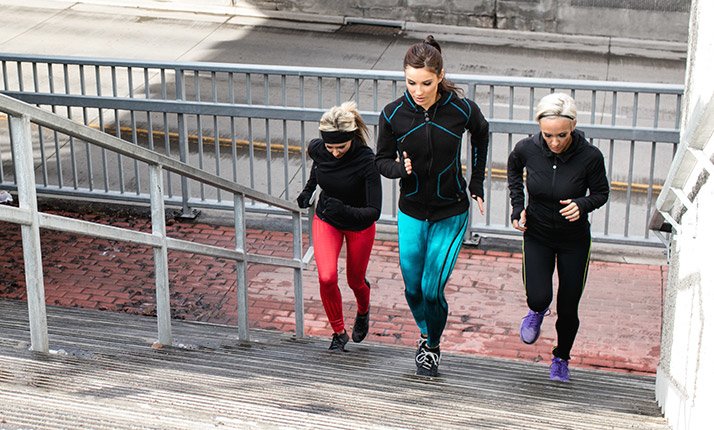
HIIT (High Intensity Interval Training) is an advanced form of aerobics designed to strip body fat at a faster rate. Although not for everyone, as it can be very demanding, HIIT is one of the more effective fat-loss methods for the intermediate to advanced trainer.
As the name suggests, HIIT requires training at high intensity (near maximal) for a series of intervals, before backing off to a lower work rate. The interval can last anywhere from 10 to 30 seconds, and the entire session might last only 20 minutes, depending on the stage (both in terms of fat storage and fitness level) one is at.
An example of a HIIT session could be as follows:
Two minutes of walking followed by fast running for 30 seconds, for 20 minutes total.
6.STAGGER FOOD INTAKE
At the smooth stage(a thin layer of fat—independent of water—covers the body) or in the shape stage (around six percent body fat), it is probably acceptable to stagger food intake so that high calories (1000 or so above normal) can be eaten for two days followed by lower calories for three days.
There are many variations on this practice, but the guiding principal stays the same: After a period of low calories, the body will tend to hold onto fat; on this basis it is thought that upping the calories will up the metabolic rate to burn more adipose tissue.
Generally the extra calories will not be stored as fat as long as the high-calorie days are limited to a certain period and are promptly followed by the lower-calorie days. The higher-calorie days are not open invitations to pig out on all manner of forbidden foods, but should be comprised of clean proteins, carbohydrates, and fats.
This strategy is best practiced when aiming to lose that remaining five to ten pounds of fat, and when a person is in reasonably good shape to begin with. If the client is overweight, the higher-calorie days could sabotage their weight loss due to a more sluggish metabolic rate.
A greater degree of excess fat would probably require consistency in terms of low-fat, low-calorie eating, as will be shown in the success stories featured later in this article.
7.DRINK AT LEAST ONE GALLON OF WATER PER DAY
In most of the weight loss success stories I have read, one common theme emerges: a higher than normal water intake is crucial for fat loss. Water intake is important for fat metabolism because it helps the liver perform the function of fat conversion for energy purposes.
Unfortunately the liver also has to work on behalf of the kidneys (if the kidneys are water-deprived), therefore lowering total liver productivity, which has deleterious consequences for the fat-conversion process. Therefore drinking enough water is an important step toward fat reduction. Drink at least a gallon of water per day, more if obese and/or living in a hot climate.
8.WEIGHT TRAINING
Weight training is a perfect activity for fat loss. Although it doesn't directly burn a greater number of fat stores than aerobics, weights will build muscle, which in turn will increase the metabolic rate 24 hours a day. The more muscle you're holding, the better your chances of losing body fat.
WHAT TO DO & WHEN
OBESE STAGE
A combination of methods is needed for those who have a significant amount of weight to lose. These are the people who typically need to lose around 40 pounds of fat before they even consider achieving muscle definition. The best strategy for these people would be to lose weight slowly with a realistic, longer-term approach.
Crash-dieting and intense training probably would not be the best option. In the case of training, the amount of weight to be lost might present excessive strain on the vital organs and joints if the training is excessively intense and/or high-impact.
Crash diets—where calories are severely restricted—will likely result in initial losses in water weight and a failure to stick to the diet due to the restriction these kinds of diets place on total nutrient balance. Use the following approach for someone who is overweight:
- Exercise moderately with aerobics (walking or cycling) and weights (12-15 repetitions, gradually increasing the intensity as weight is lost.
- Gradually cut out all bad fats while strategically cutting back on carbohydrates.
- Drink plenty of water to maintain feelings of fullness and help with fat mobilization.
- Cut out junk foods.
- Use a personal trainer for motivation.
- Cut back on alcohol, or eliminate it entirely.
- Make a plan.
- Be consistent.
- Use a fat-burning supplement.
MODERATELY OVERWEIGHT STAGE

At this stage one is visually overweight, but not obese. Typically they are holding around 20 pounds of fat and have a body fat percentage of around 17-18 percent in males and 25 percent in females.
The best strategy would be to gradually drop excess body fat through a combination of low-intensity and high-intensity training, coupled with a sensible eating approach. The following guidelines can be used:
- Exercise moderately with aerobics (a combination of walking, cycling, and rowing) and weights (8-12 repetitions), while incorporating the occasional HIIT session after the first few pounds are lost.
- Gradually cut out all bad fats while strategically cutting back on carbohydrates.
- Drink plenty of water to maintain feelings of fullness and help with fat mobilization.
- Cut out junk foods.
- Use a personal trainer for motivation.
- Cut back on alcohol, or eliminate it entirely.
- Make a plan.
- Be consistent.
- Use a fat-burning supplement.
SMOOTH STAGE
The smooth stage could be defined as a puffy appearance with a small amount of visible body fat (around 11 percent in men and 15 percent in women; about 10 total pounds to lose to become "in shape").
This look would probably be regarded as normal and healthy, but there is an absence of muscle definition due to a thin layer of fat—the off-season bodybuilder is usually at this stage. To drop these additional 10 pounds to reveal a muscular physique, use the following methods:
- Train aerobically with one moderate-intensity session and four HIIT sessions per week.
- Weight train all muscle groups using 8-12 repetitions.
- Gradually cut out all bad fats while strategically cutting back on carbohydrates.
- Stagger calories (three lower-calorie days followed by two higher-calorie days).
- Drink plenty of water to maintain feelings of fullness and help with fat mobilization.
- Cut out junk foods.
- Use a personal trainer for motivation.
- Cut back on alcohol, or eliminate it entirely.
- Make a plan.
- Be consistent.
- Use a fat-burning supplement.
IN-SHAPE STAGE
For those who only have three or four pounds of fat to lose in order to reveal a ripped, muscular physique, it is probably also best to do HIIT, as this should more effectively rev the metabolic rate while one is at an advanced fat-burning level.
For the out-of-shape beginner, HIIT might be overkill, but for the in-shape, advanced trainer, it could prove to be perfect because it's an effective way of improving an already efficient metabolism. HIIT sessions can be done five times a week, independent from any other form of training. The following are additional ways to burn remaining visible body fat:
- Train with weights using 8-12 repetitions.
- Gradually cut out all bad fats while strategically cutting back on carbohydrates.
- Stagger calories (three lower-calorie days followed by two higher-calorie days).
- Drink plenty of water to maintain feelings of fullness and help with fat mobilization.
- Cut out junk foods.
- Use a personal trainer for motivation.
- Cut back on alcohol, or eliminate it entirely.
- Make a plan.
- Be consistent.
- Use a fat-burning supplement.
ADDITIONAL FAT-LOSS TIPS
1.CUT ALCOHOL
One of the worst practices when wanting to lose weight, drinking alcohol will not only add empty calories but will reduce appetite and lower testosterone levels for up to 24 hours (testosterone helps to burn fat). Alcohol will also reduce the number of fat calories burned for energy.
After alcohol is consumed it is converted into a substance called acetate, which is used in place of fat for energy, thus helping the body to maintain its fat stores1. For the overweight person, alcohol is a definite problem on this basis alone.
2.MAKE A PLAN
Making a plan will ensure fat loss is achieved with greater certainty. Having predefined goals and a progress diary will help your client stick to their plan, and allow for a greater degree of accountability. The first step is to determine exactly what their goals are.
The ability to do what is required every day without fail is the hallmark of a winner. For fat loss, all the right steps need to be taken at the right times to realize this goal. As will be shown in the following success stories, the individuals unwaveringly stuck to their plan and achieved their fat loss goals—they were consistent.
3.USE A PERSONAL TRAINER
A personal trainer can add help to motivate and inspire a person to lose body fat. Having someone on hand to lend support and expertise can really make the difference for those who are struggling with their weight-loss efforts. The best personal trainer is the one who has the right amount of knowledge and who knows how to plan a program for the specific needs of their client.
4.USE A FAT-BURNING SUPPLEMENT
Fat-burning supplements can have a thermogenic effect on the body, which causes fat to be burned at a faster rate. It is important to realize that these are supplements that can help if they are used in conjunction with an adequate diet and training regimen.